
Llámanos
+86-18962820095

 English
Contenido
- 1 Cómo la degradación UV daña las lonas comunes
- 2 La ciencia detrás de la estabilización UV en lonas de PVC
- 3 Construcción y estructura de lona de PVC resistente a los rayos UV
- 4 Propiedades clave de rendimiento y especificaciones típicas
- 5 Lona de PVC resistente a los rayos UV versus lona de PVC estándar: una comparación directa
- 6 Aplicaciones comunes de la lona de PVC resistente a los rayos UV
- 6.1 Coberturas de Transporte y Logística
- 6.2 Coberturas Agrícolas y Láminas Protectoras
- 6.3 Cubiertas para obras de construcción y cerramientos para andamios
- 6.4 Cubiertas para equipos y máquinas industriales
- 6.5 Cubiertas para paletas y protección de carga
- 6.6 Estructuras de sombra, marquesinas y toldos
- 6.7 Puertas para mascotas, cortinas y aplicaciones especiales
- 7 Cómo seleccionar la lona de PVC resistente a los rayos UV adecuada para su aplicación
- 8 Consejos de cuidado y mantenimiento para maximizar la vida útil
- 9 Qidong Good Tarpaulin: fabricante profesional de lonas de PVC resistentes a los rayos UV
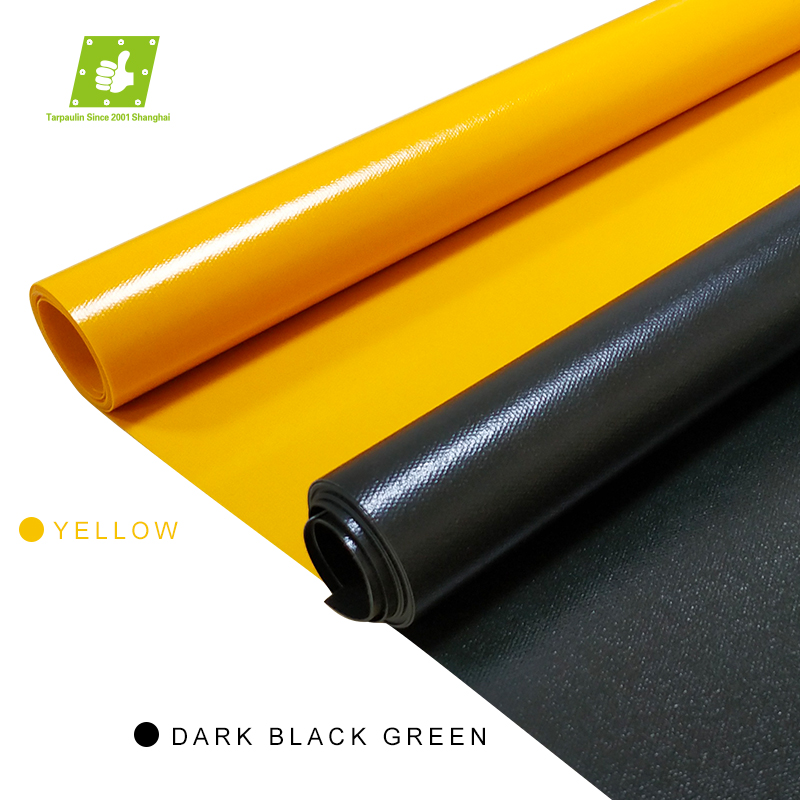
Lona de PVC resistente a los rayos UV es un material de tela recubierto de alto rendimiento fabricado laminando o recubriendo una tela base de poliéster con un compuesto de cloruro de polivinilo (PVC) que contiene aditivos estabilizadores UV especialmente formulados. Estos estabilizadores, principalmente estabilizadores de luz de aminas impedidas (HALS) y absorbentes de rayos UV, se mezclan directamente con el compuesto de revestimiento de PVC durante la producción, creando un material que resiste la fotodegradación, la decoloración y la fragilidad estructural que sufren las lonas comunes cuando se exponen a la luz solar prolongada.
En términos prácticos: una lona de PVC estándar sin tratar que se deja al aire libre puede comenzar a mostrar una decoloración visible en el interior. 6 a 12 meses y un importante debilitamiento estructural 1 a 2 años . Una lona de PVC debidamente estabilizada contra los rayos UV, en condiciones comparables, puede mantener más del 80% de su resistencia a la tracción original y conservar un color aceptable después de 4 a 7 años de exposición continua al aire libre, lo que lo hace realmente adecuado para aplicaciones a largo plazo en lugar de uso temporal o estacional.
Cómo la degradación UV daña las lonas comunes
Para comprender por qué es importante la resistencia a los rayos UV, es útil saber exactamente qué efecto tiene la radiación ultravioleta en los materiales de PVC desprotegidos. La radiación ultravioleta del sol ocupa el rango de longitud de onda de 100 a 400 nanómetros , con la porción más dañina para los polímeros entre 290 y 360 nm — un rango que atraviesa la atmósfera en cantidades significativas durante todo el año, incluso en días nublados.
Cuando los fotones ultravioleta chocan contra el PVC desprotegido, inician una cadena de reacciones fotoquímicas:
- Escisión de cadena: La energía ultravioleta rompe las cadenas principales del polímero, reduciendo el peso molecular del PVC y provocando una pérdida progresiva de resistencia a la tracción, resistencia al desgarro y alargamiento a la rotura.
- Deshidrocloración: El PVC libera gas cloruro de hidrógeno (HCl) bajo la exposición a los rayos UV y al calor, dejando secuencias de polienos conjugados que aparecen como una decoloración de amarillo a marrón.
- Migración y pérdida de plastificante: El calor ultravioleta acelera la evaporación y la migración superficial de los plastificantes del compuesto de PVC, lo que hace que el material se vuelva progresivamente rígido y quebradizo.
- Entizamiento y agrietamiento de la superficie: A medida que se acumula la degradación de la superficie, el revestimiento de PVC desarrolla una capa superficial calcárea y polvorienta seguida de microfisuras que comprometen el rendimiento de impermeabilización.
- Desvanecimiento del pigmento: La radiación ultravioleta descompone la estructura molecular de los pigmentos orgánicos, provocando la característica decoloración de las lonas de colores, adquiriendo un aspecto descolorido y desigual.
El efecto combinado de estos procesos puede reducir la resistencia a la tracción de una lona de PVC desprotegida al 40 a 60% en dos años de exposición continua al aire libre en climas soleados, como entornos tropicales, subtropicales o de gran altitud, donde la intensidad de los rayos UV es mayor.
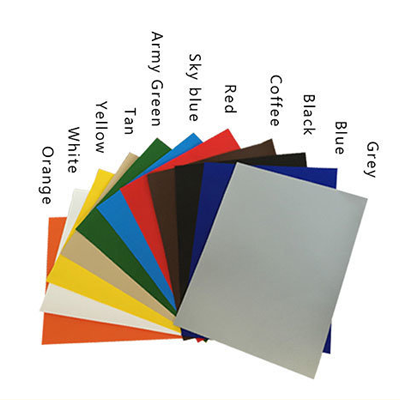
La ciencia detrás de la estabilización UV en lonas de PVC
La lona de PVC resistente a los rayos UV logra su rendimiento extendido en exteriores mediante la incorporación de una o más clases de aditivos estabilizadores de rayos UV en el compuesto de revestimiento de PVC. Las formulaciones modernas suelen combinar varios tipos de aditivos en un sistema sinérgico que aborda diferentes etapas del proceso de fotodegradación.
Absorbedores de rayos UV (UVA)
Los absorbentes de rayos UV son compuestos químicos (comúnmente benzofenonas, benzotriazoles o triazinas) que absorben fotones UV dañinos y convierten su energía en calor inofensivo antes de que la radiación pueda iniciar reacciones de fotodegradación en las cadenas de polímero de PVC. Los UVA a base de benzotriazol son particularmente eficaces en todo el 300–380 nm gama y se utilizan ampliamente en formulaciones de PVC para exteriores. Se incorporan a niveles de carga típicos. 0,2 a 0,5% en peso del compuesto de PVC.
Estabilizadores de luz de aminas impedidas (HALS)
Los compuestos HALS no absorben la radiación UV directamente. En cambio, operan como carroñeros radicales — interceptar y neutralizar los radicales libres generados por reacciones de oxidación iniciadas por rayos UV antes de que esos radicales puedan propagar reacciones de ruptura de cadenas a través de la matriz polimérica. Los HALS son particularmente efectivos en la estabilización a largo plazo porque se regeneran en el ciclo de eliminación en lugar de consumirse, lo que les brinda un rendimiento sostenido de tipo catalítico que complementa el sistema de absorción de rayos UV. En combinación con los UVA, los aditivos HALS pueden extender la vida útil al aire libre en un factor de 3 a 5 veces en comparación con el PVC no estabilizado.
Estabilizadores de calor y antioxidantes
El PVC requiere inherentemente estabilizadores térmicos (normalmente compuestos de calcio-zinc, bario-zinc o compuestos organoestaño) para evitar la deshidrocloración térmica durante el procesamiento. En formulaciones resistentes a los rayos UV, estos estabilizadores térmicos también se seleccionan por su contribución a la estabilidad termooxidativa a largo plazo durante el servicio al aire libre, donde las superficies de lonas de colores oscuros pueden alcanzar 60–80°C bajo la luz solar directa incluso en climas moderados. Se añaden antioxidantes como fenoles impedidos y fosfitos para eliminar los productos de oxidación generados por la acción combinada de los rayos UV, el calor y el oxígeno.
Pigmentos inorgánicos para la estabilidad del color
Además de los estabilizadores moleculares, las lonas de PVC resistentes a los rayos UV destinadas a aplicaciones coloreadas utilizan pigmentos inorgánicos (como dióxido de titanio para el blanco, óxidos de hierro para los tonos tierra y óxidos metálicos mixtos para los colores brillantes) en lugar de pigmentos orgánicos siempre que sea posible. Los pigmentos inorgánicos son inherentemente más estables a los rayos UV que las alternativas orgánicas y contribuyen tanto a la solidez del color como al efecto general de protección UV de la capa de recubrimiento. Dióxido de titanio, utilizado en 5–15% de carga en formulaciones blancas y de colores claros, proporciona simultáneamente una excelente opacidad, blancura y opacidad UV.
Construcción y estructura de lona de PVC resistente a los rayos UV
La lona de PVC resistente a los rayos UV es una estructura laminada compuesta, y cada capa contribuye al rendimiento general de la tela terminada. Comprender la construcción ayuda a evaluar la calidad y seleccionar la especificación adecuada para una aplicación determinada.
La malla tejida de poliéster (tejido base)
El núcleo estructural de la lona de PVC es una rejilla tejida de hilo de poliéster de alta tenacidad, conocida como malla. La malla es responsable de la resistencia a la tracción, la resistencia al desgarro y la estabilidad dimensional de la tela. El número de hilos (expresado como hilos por 10 cm en direcciones de urdimbre y trama) y el denier del hilo determinan directamente el rendimiento mecánico de la lona. Las lonas típicas de grado industrial utilizan mallas de 1000 deniers × 1000 deniers poliéster a densidades de 9×9 a 18×18 hilos por 10 cm . Los grados de alta resistencia utilizan hilos de mayor denier y tejidos más apretados.
Las capas de revestimiento de PVC
El compuesto de PVC, una formulación de PVC plastificado que contiene el paquete estabilizador UV, plastificantes, rellenos, pigmentos y auxiliares de procesamiento, se aplica a ambas caras de la malla mediante calandrado, recubrimiento con cuchilla sobre rodillo o laminación por extrusión. El recubrimiento penetra los intersticios de la malla para crear una unión mecánica y acumula capas de recubrimiento en cada cara que brindan impermeabilización, resistencia química y una superficie con protección UV. El peso total de la tela es la suma del peso de la malla y de ambas capas de recubrimiento, que generalmente van desde 350 g/m² a 900 g/m² para aplicaciones comerciales e industriales comunes.
Opciones de acabado superficial
La superficie exterior de la lona de PVC resistente a los rayos UV se puede acabar de varias formas según la aplicación prevista:
- Acabado brillante: Superficie lisa y de alto brillo que elimina la suciedad y el agua de manera eficiente; comúnmente utilizado para cubiertas de camiones y remolques
- Acabado mate: Superficie de poco brillo con reflejo de luz reducido; preferido para aplicaciones donde el deslumbramiento no es deseable, como cubiertas agrícolas y estructuras de sombra
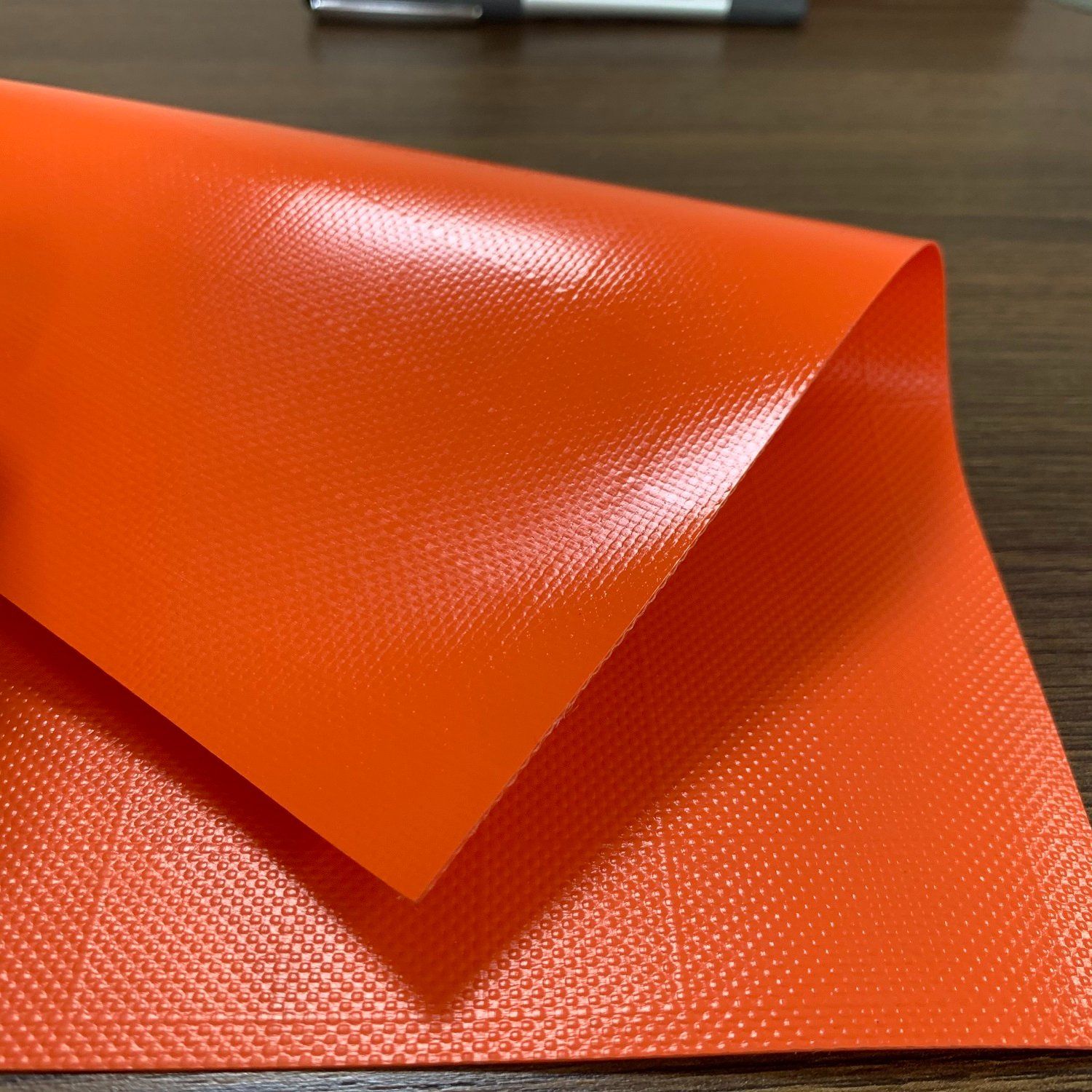
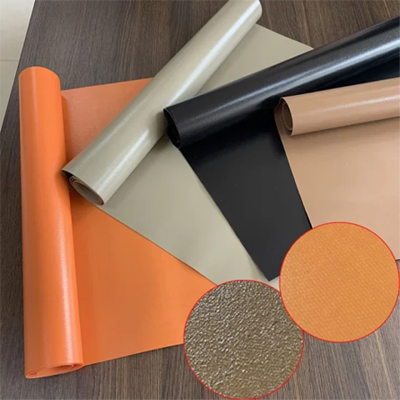
- En relieve (lichi o patrón de diamantes): Superficie texturizada que mejora el agarre, reduce la visibilidad de la abrasión de la superficie y proporciona una alternativa estética a las superficies lisas.
- Revestimiento antideslizante: Se aplica a lonas destinadas a cubrir pisos, rampas o usos de protección de carga donde se requiere tracción de pies o equipos.
Propiedades clave de rendimiento y especificaciones típicas
La lona de PVC resistente a los rayos UV se especifica mediante una variedad de parámetros de rendimiento mensurables. La siguiente tabla resume las propiedades clave y los valores típicos de los grados estándar, de servicio medio y de servicio pesado:
| Propiedad | Grado estándar | Grado de servicio medio |
|---|---|---|
| Peso Total | 350 - 450 g/m² | 500 - 650 g/m² |
| Resistencia a la tracción (deformación/trama) | ≥ 1.500 / 1.500 N/5cm | ≥ 2.500 / 2.500 N/5cm |
| Resistencia al desgarro | ≥ 180 N | ≥ 300N |
| Clasificación impermeable | ≥ 1.500 mm H₂O | ≥ 2.000 mm H₂O |
| Resistencia a los rayos UV (arco de xenón) | 500 - 1.000 horas | 1.000 - 2.000 horas |
| Rango de temperatura de servicio | -20°C a 70°C | -25°C a 70°C |
| Retardante de llama | Opcional (grado FR) | Opcional (grado FR) |
Métodos de prueba de resistencia a los rayos UV
El rendimiento de la resistencia a los rayos UV se evalúa mediante pruebas estandarizadas de intemperismo acelerado que simulan años de exposición al aire libre en un entorno de laboratorio controlado. Los dos métodos más utilizados son:
- Meteorómetro de arco de xenón (ISO 4892-2 / ASTM G155): Utiliza una lámpara de arco de xenón filtrada para aproximarse al espectro solar completo, incluidos los componentes UV, visible e infrarrojo. Las muestras se someten a irradiancia UV cíclica y pulverización de agua a temperaturas controladas. Después de la duración especificada de la prueba, se evalúan la retención de la resistencia a la tracción, el cambio de color (medido por ΔE en la escala CIE Lab) y la apariencia de la superficie.
- Meteorómetro con lámpara fluorescente UV (ISO 4892-3 / ASTM G154): Utiliza lámparas fluorescentes UV-B o UV-A para proporcionar una exposición más agresiva solo a los rayos UV. Comúnmente utilizado para pruebas comparativas y control de calidad en lugar de predicción de vida útil completa.
Una lona de PVC resistente a los rayos UV de calidad debe demostrar retención de resistencia a la tracción superior al 75% y un cambio de color de ΔE por debajo de 3,0 después de 1.000 horas de exposición al arco de xenón se considera adecuado para aplicaciones exigentes en exteriores a largo plazo.
Lona de PVC resistente a los rayos UV versus lona de PVC estándar: una comparación directa
Para los compradores que eligen entre grados estándar y resistentes a los rayos UV, la siguiente tabla comparativa resume las diferencias prácticas en rendimiento en exteriores, vida útil e idoneidad de la aplicación:
| Factor de comparación | Lona de PVC estándar | Lona de PVC resistente a los rayos UV |
|---|---|---|
| Aditivos estabilizadores UV | Ninguno o mínimo | Sistema HALS absorbentes de UV (UVA) |
| Vida útil prevista en exteriores | 1 – 2 años en climas soleados | 4 – 7 años en condiciones comparables |
| Retención del color después de 2 años | Es probable que se desvanezca significativamente | Desvanecimiento mínimo; color conservado en gran medida |
| Retención de fuerza después de 2 años | 40 – 60% de pérdida típica | Menos del 20% de pérdida típica |
| Desarrollo de fragilidad superficial | Rápido: craqueo en 2 años | Lento: flexibilidad mantenida durante años |
| Mejor ajuste de aplicación | Uso a corto plazo, en interiores o en la sombra | Entornos exteriores con alta radiación ultravioleta a largo plazo |
| Costo total de propiedad | Mayor (reemplazo frecuente) | Más bajo (vida útil extendida) |
Aplicaciones comunes de la lona de PVC resistente a los rayos UV
La combinación de estabilidad a los rayos UV, impermeabilización, resistencia mecánica y flexibilidad hace que la lona de PVC resistente a los rayos UV sea adecuada para una amplia gama de aplicaciones industriales, agrícolas, de transporte y comerciales al aire libre. El material puede suministrarse como tela en rollo para su fabricación o convertirse en productos terminados adaptados a casos de uso específicos.
Coberturas de Transporte y Logística
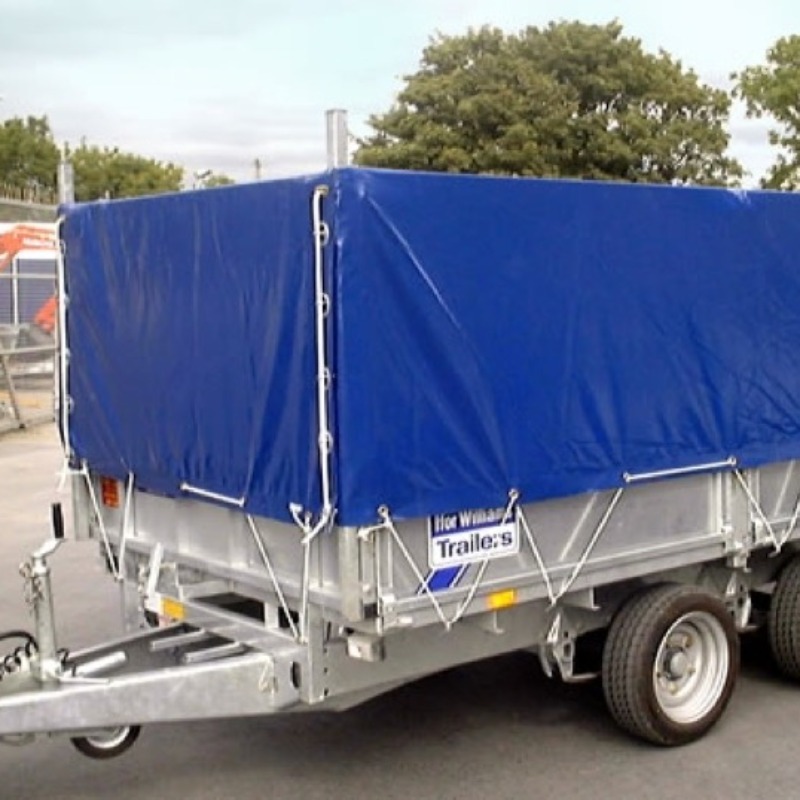
Las cortinas laterales para camiones, cubiertas para remolques y cubiertas para cargas en plataformas planas representan uno de los segmentos de aplicación más importantes para las lonas de PVC resistentes a los rayos UV. Estas cubiertas se enfrentan a una exposición continua al aire libre: vibraciones de la carretera, cargas de viento, lluvia y luz solar directa e intensa durante miles de horas de funcionamiento al año. La tela resistente a los rayos UV es esencial en este contexto porque la decoloración del color en la flota de una empresa de transporte representa tanto un problema de imagen de marca como una evidencia de degradación del material. Sistemas de lonas para camiones Por lo general, se especifica una lona de PVC resistente a los rayos UV con un peso mínimo de 650 g/m² , compatibilidad con soldaduras de alta frecuencia y un alargamiento de rotura de al menos 25% en ambas direcciones para acomodar la carga dinámica sin desgarrarse.
Coberturas Agrícolas y Láminas Protectoras
Las aplicaciones agrícolas incluyen cubiertas para almacenamiento de granos, envolturas para fardos de heno, cubiertas para fosos de ensilaje, marquesinas para refugios de equipos y bolsas de protección para frutas. Estos usos colocan la lona bajo la luz solar directa y sostenida, a menudo durante temporadas de crecimiento enteras, sin retirarla. La lona resistente a los rayos UV en entornos agrícolas debe combinar la estabilidad a los rayos UV con Resistencia a salpicaduras de agroquímicos, excrementos de pájaros y ácidos orgánicos. provenientes de la fermentación de ensilaje o material de compostaje, todos los cuales son estrés de degradación adicional que el PVC estabilizado contra los rayos UV maneja de manera más efectiva que las alternativas.
Cubiertas para obras de construcción y cerramientos para andamios
Los sitios de construcción utilizan lonas de PVC resistentes a los rayos UV para cerramientos de andamios, contención de escombros, protección temporal contra la intemperie y cubiertas de almacenamiento de materiales. En este entorno exigente, la tela debe resistir la carga del viento (que prueba la resistencia al desgarro en ojales y costuras), la abrasión del contacto con los andamios y meses de uso continuo al aire libre. Los grados retardantes de llama de lona de PVC resistente a los rayos UV se especifican con frecuencia para cerramientos de andamios y estructuras temporales donde se aplican normas de seguridad contra incendios.
Cubiertas para equipos y máquinas industriales
La maquinaria exterior, los generadores, los equipos HVAC, la maquinaria minera y los equipos de manipulación portuaria requieren cubiertas protectoras que puedan permanecer en su lugar durante períodos prolongados (a menudo años) sin reemplazo. La lona de PVC resistente a los rayos UV fabricada a medida para el perfil de la máquina proporciona una alternativa rentable a los recintos metálicos especialmente diseñados para equipos que están estacionalmente inactivos o en espera de ser utilizados. La estabilidad dimensional de la tela estabilizada contra los rayos UV a lo largo del tiempo garantiza que las cubiertas sigan ajustándose correctamente sin la distorsión y la contracción que presentan las lonas degradadas.
Cubiertas para paletas y protección de carga
Las áreas de almacenamiento de paletas al aire libre en puertos, centros de distribución y patios de fabricación exponen los productos apilados a rayos UV, lluvia y viento prolongados. Las cubiertas para paletas de lona de PVC resistente a los rayos UV brindan una solución de protección de carga reutilizable, duradera y rentable que dura más que los sistemas de envoltura estirable de un solo uso durante todo el período de costo del ciclo de vida. Una cubierta de paleta estándar fabricada con Lona de PVC resistente a los rayos UV de 500 g/m² normalmente se puede reutilizar en 50 a 100 ciclos de palet o más antes de que sea necesario el reemplazo.
Estructuras de sombra, marquesinas y toldos
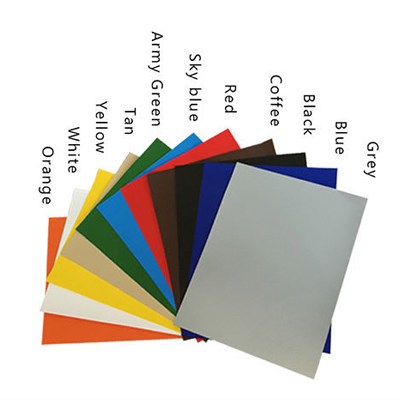
Los toldos fijos y retráctiles, las marquesinas de los garajes, las cubiertas de los puestos del mercado y las estructuras de sombra al aire libre están permanentemente expuestas a la luz solar por diseño. Para estas aplicaciones, se prefiere la lona de PVC resistente a los rayos UV con alta solidez del color, un acabado superficial mate o satinado y resistencia al crecimiento de algas y moho (que se puede lograr mediante paquetes de aditivos antimicrobianos en el revestimiento de PVC). Los colores personalizados y los gráficos impresos, incluidos logotipos de empresas o patrones decorativos aplicados mediante impresión UV digital, mantienen su calidad visual mucho más tiempo en sustratos estabilizados contra rayos UV que en PVC estándar.
Puertas para mascotas, cortinas y aplicaciones especiales
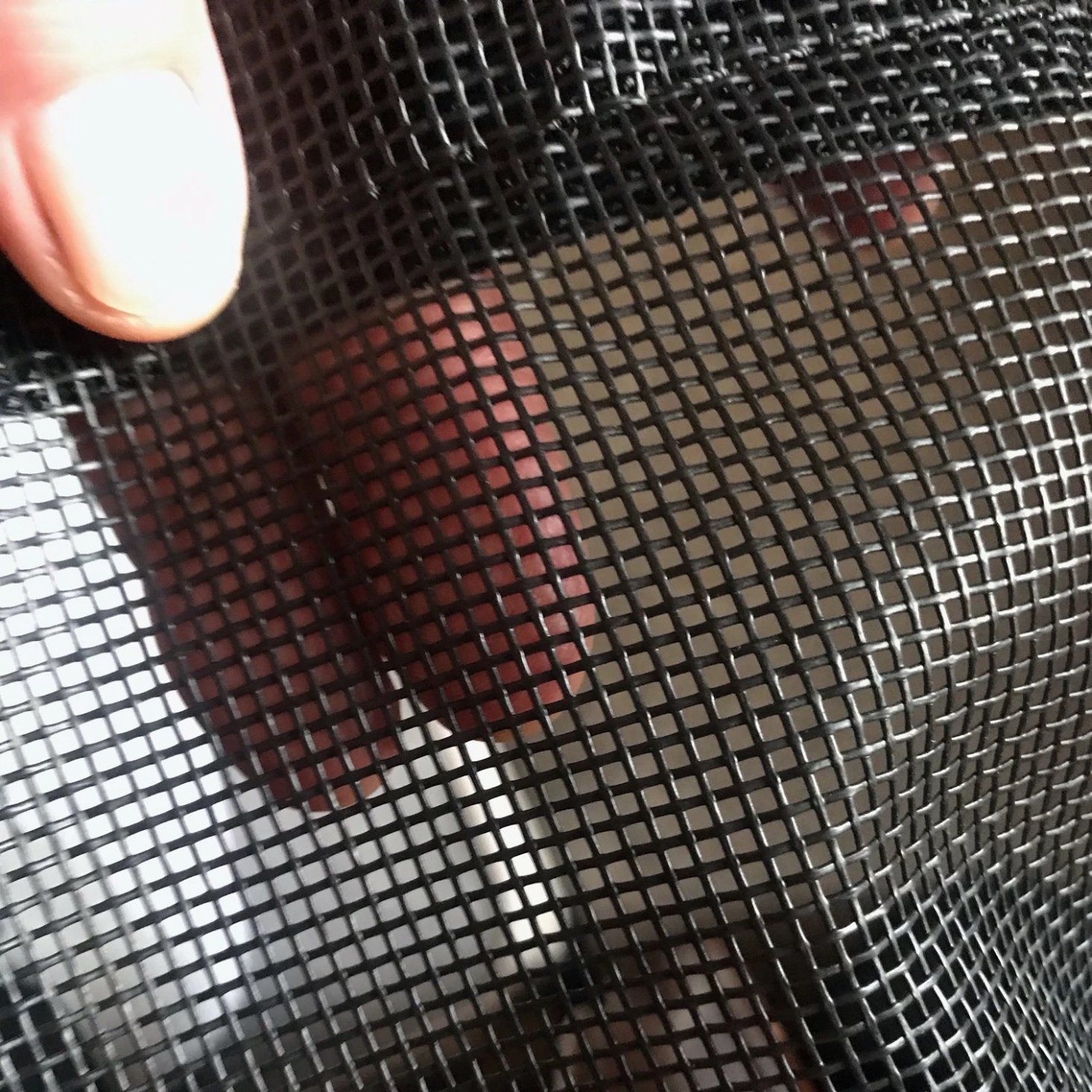
Además de las aplicaciones industriales y comerciales a gran escala, la tela de lona de PVC resistente a los rayos UV también se utiliza en aplicaciones de consumo y especializadas. Los grados transparentes o translúcidos de PVC estabilizado contra los rayos UV se utilizan para puertas para mascotas, cortinas de tiras en cámaras frigoríficas o almacenes y cubiertas de muebles de exterior. La resistencia a los rayos UV en estas aplicaciones garantiza que los materiales transparentes o ligeramente teñidos no amarilleen ni se vuelvan quebradizos con la exposición prolongada al sol, manteniendo tanto la funcionalidad como la apariencia durante años de uso.
Cómo seleccionar la lona de PVC resistente a los rayos UV adecuada para su aplicación
Para elegir la especificación correcta de lona de PVC resistente a los rayos UV es necesario hacer coincidir las propiedades del tejido con las demandas específicas de la aplicación prevista. El siguiente marco de selección cubre los criterios de evaluación más importantes:
- Intensidad UV y clima: Las aplicaciones en entornos tropicales, subtropicales, de gran altitud o desérticos (índice UV constantemente superior a 8) requieren una mayor carga de estabilizador UV y deben especificar telas con al menos 1000 horas de rendimiento de arco de xenón. Los climas templados con intensidad UV moderada pueden ser atendidos adecuadamente por grados estándar tratados con UV.
- Requisitos de carga mecánica: Seleccione el peso de la tela y la resistencia a la tracción según la carga del viento, las cargas puntuales en las fijaciones y si la cubierta estará bajo tensión o plana. Las aplicaciones de mayor tensión, como cortinas de camiones y cerramientos de andamios, requieren grados más pesados con costuras reforzadas y dobladillos soldados o cosidos.
- Requisito de impermeabilización: Las cubiertas exteriores estándar requieren una altura de impermeabilidad de al menos 1.500 mm. Las aplicaciones en climas con lluvias intensas o donde se espera que se acumule agua deben especificar 2000 mm o más.
- Rango de temperatura: Si la cubierta experimentará temperaturas bajo cero, confirme que la formulación de PVC conserva flexibilidad a la temperatura de servicio más baja esperada. Los grados para climas fríos utilizan un mayor contenido de plastificantes y tipos de plastificantes específicos que mantienen la flexibilidad hasta −30°C o menos .
- Retardante de llama: Para cerramientos de andamios, estructuras temporales, carpas para eventos o aplicaciones regidas por códigos de seguridad contra incendios, especifique grados FR (retardantes de llama) que cumplan con las normas pertinentes, como EN 13501-1, DIN 4102 B1 o NFPA 701.
- Requisitos de color e impresión: Si la lona llevará marcas o colores de seguridad de alta visibilidad, asegúrese de que el grado de resistencia a los rayos UV también especifique sistemas de pigmentos resistentes a los rayos UV con un cambio de color ΔE inferior a 3,0 después de 1000 horas de arco de xenón y confirme la compatibilidad con el proceso de impresión previsto (inyección de tinta solvente, inyección de tinta UV o serigrafía).
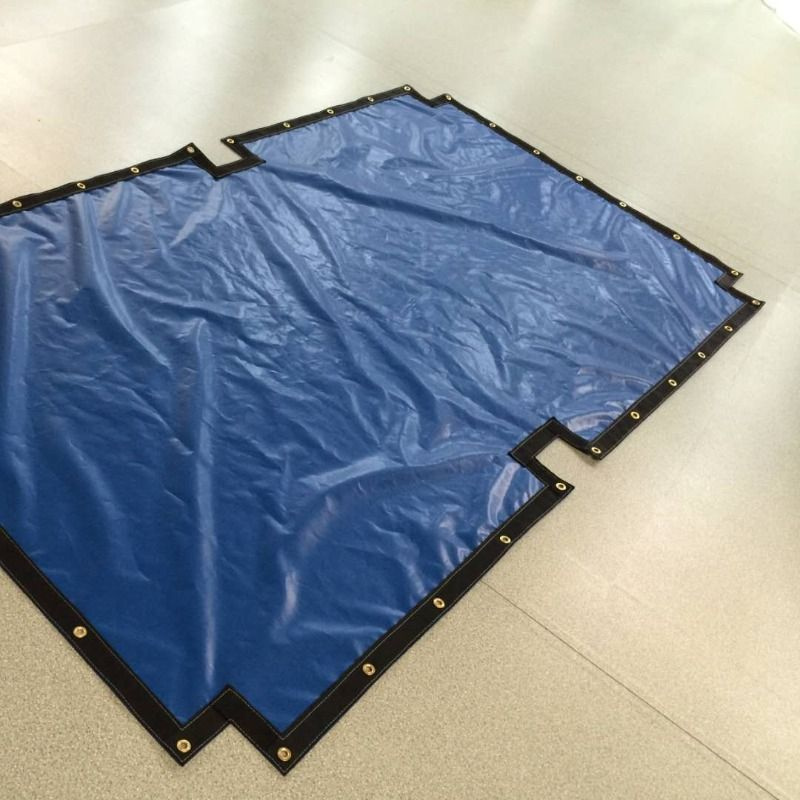
- Necesidades de fabricación a medida: Considere si necesita productos terminados (cubiertas soldadas con ojales, correas, hebillas, dimensiones personalizadas o esquinas reforzadas) en lugar de tela en rollo. Los proveedores que ofrecen capacidades de conversión internas pueden optimizar el diseño para su aplicación específica, mejorando el ajuste, la durabilidad en los puntos de tensión y la vida útil general del producto.
Consejos de cuidado y mantenimiento para maximizar la vida útil
Incluso la lona de PVC más estabilizada contra los rayos UV ofrecerá una vida útil más larga con el cuidado y mantenimiento adecuados. Las siguientes pautas prácticas ayudan a preservar las propiedades del material durante su servicio al aire libre:
- Limpieza: Elimine la suciedad, el polvo, los excrementos de pájaros y el material orgánico con regularidad utilizando agua y jabón suave con un cepillo suave. Evite estropajos de limpieza abrasivos o disolventes fuertes (acetona, MEK, tolueno) que disuelven o hinchan el revestimiento de la superficie de PVC. Enjuague bien con agua limpia y déjelo secar completamente antes de doblarlo o enrollarlo para guardarlo.
- Tratamiento de moho y algas: El moho o las algas de la superficie se pueden tratar con una solución de lejía diluida (hipoclorito de sodio al 1-2 % en agua) aplicada con un paño suave, se deja durante 15 minutos y luego se enjuaga bien. El crecimiento prolongado de moho en la superficie puede dañar mecánicamente el revestimiento de PVC y acelerar la degradación por rayos UV.
- Plegado y almacenamiento: Cuando almacene lonas durante períodos prolongados, dóblelas sin apretar y guárdelas en un lugar fresco, sombreado y seco, lejos de la luz solar directa. Evite el plegado prolongado y apretado en temperaturas frías, lo que puede causar grietas en el revestimiento de PVC. Es preferible enrollarlo sobre un núcleo que plegarlo en plano para el almacenamiento a largo plazo de paneles de tela anchos.
- Inspección de costuras y ojales: Inspeccione periódicamente las uniones soldadas o cosidas para detectar delaminación y los ojales o accesorios para ojales en busca de grietas o corrosión. La reparación temprana de pequeñas fallas en las costuras evita la propagación a desgarros más grandes.
- Manejo de la tensión: Evite sobretensionar las cubiertas instaladas, lo que concentra la tensión en los puntos de fijación y acelera el inicio del desgarro. Utilice puntos de fijación intermedios para distribuir la carga sobre un mayor número de ojales en cubiertas grandes sujetas a cargas de viento.
Qidong Good Tarpaulin: fabricante profesional de lonas de PVC resistentes a los rayos UV
Qidong Good Tarpaulin es un fabricante y exportador profesional con sede en China de telas de lona de PVC con Más de 20 años de experiencia en producción y exportación. . Operando como una empresa y proveedor exclusivo de lonas de PVC resistentes a los rayos UV, la gama de productos de la organización cubre telas de lonas de PVC, telas de malla de PVC, telas de lona de PVC y una amplia selección de materiales textiles recubiertos especiales diseñados para aplicaciones industriales y exteriores exigentes.
Más allá de suministrar tela por rollo, Qidong Good Tarpaulin ofrece fabricación de productos terminados personalizados basado en los requisitos de aplicación específicos de los clientes. Los productos terminados fabricados con su tela de lona de PVC resistente a los rayos UV incluyen cubiertas para camiones, cubiertas para remolques, cubiertas para máquinas, cubiertas para equipos, cubiertas para paletas, bolsas para recolección de frutas, puertas para mascotas, cortinas de tiras y marquesinas y toldos decorativos o funcionales. Esta capacidad integrada, desde la producción de telas en bruto hasta la conversión del producto terminado, permite a los clientes obtener una solución completa y optimizada para la aplicación de un único proveedor con un profundo conocimiento de los materiales.
Con más de dos décadas de experiencia acumulada en la formulación, tejido, recubrimiento y fabricación de lonas de PVC, la empresa apoya a clientes en industrias que van desde el transporte por carretera y la logística hasta la agricultura, la construcción y la protección de equipos para exteriores, brindando soluciones de lonas resistentes a los rayos UV que brindan un rendimiento verificado a largo plazo en exteriores respaldado por una organización de fabricación experimentada.